
The year 2025 was a big year for the industry, with sales projected to reach $1.1 trillion. This highlights the strong demand for dining out—a huge opportunity for restaurant operators. Could it possibly carry on to 2026 for anyone planning to open a restaurant?
If you’re ready to launch your business this year, the question shouldn’t just be about what you’re serving, but how you introduce yourself to the neighborhood.
In this high-stakes environment, you only get one chance to make a lasting first impression. It pays to gauge whether you should launch a grand opening head-onhead on or test your target market first.
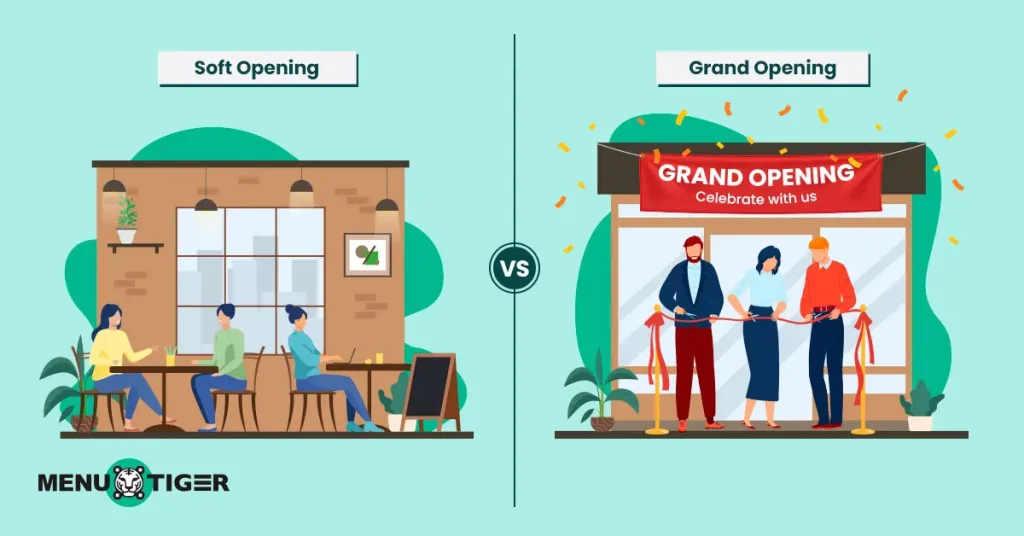
This article will help you understand the difference between a soft opening vs grand opening, and why both matter as the first step towards your restaurant’s success.
What is a soft opening?
To fully understand what is a soft opening and why it matters, it helps to look at the key factors that define it:
Purpose
Soft opening is not to fully welcome customers yet, but rather to serve as a test run. It allows the restaurant to check whether its restaurant technology is working properly, ensure the kitchen can handle specific orders, and identify areas that need improvement before the official launch.
Focus
The focus is on internal and operational aspects of the restaurant rather than on sales. Management closely monitors accuracy, speed, technical performance, workflow, and staff coordination.
Audience
The crowd is usually limited to a “friendly” group, such as friends, family, or local neighbors, Usually, these people in the soft opening are the people who will give honest feedback and constructive criticism.
Promotion
Marketing is usually done through direct message invites, private emails, or “Invite Only” signs. Your marketing to this group should be: “Help us get this right.” People love being part of a “behind-the-scenes” process.
Timing
A smart move is to do it before grand opening (like 2 to 4 days prior). By doing this, you are testing the exact environment the public will see.
What are the benefits of hosting a soft opening?
The benefits of a soft opening are essentially about giving you a proactive grand opening.
Here’s why:
1. Serve as your safety net
A soft opening exposes hidden gaps between back-of-house and front-of-house operations before they can impact your reputation.
By processing real orders in a live environment, your team can analyze and synchronize workflows, identify technical glitches, and adjust strategies ahead of the official opening.
2. Collect valuable feedback
Because the guests you invite usually know it’s a trial run, they are more willing to give honest and constructive feedback instead of leaving negative online reviews, in the actual opening.
3. Encourage smart spending
It’s hard to guess exactly how much supplies you’ll need until you actually start serving people. A soft opening shows you what people are buying and how fast you’re using up your stock.
This data helps you order the right number of supplies for the big launch, saving you from wasting money on extra inventory or running out of your best-sellers
4. Break false expectation
The biggest mistake a new owner can make is relying on a “perfect” plan that exists only in their head. Even with thorough research, poor execution can easily ruin that plan.
A soft launch forces you to face reality while you still have time to pivot. It breaks false assumptions about customer behavior and allows you to build your business on facts rather than hope.
5. Training ground for staff
When a glass breaks or an order gets mixed up during a soft opening, it serves as a “teachable moment” for your staff. It allows you to establish clear protocols for how to handle negative online reviews and complaints, ensuring your team stays calm and professional during future busy shifts.
What is a grand opening?
To understand soft opening vs grand opening, it helps to examine the key factors that differentiate a grand opening from a soft opening:
Purpose
The purpose of the grand opening is to officially welcome your restaurant to the public and the community. Unlike a test run, it marks the first full day of operating your business.
Focus
The focus shifts entirely to customer first impression, marketing, sales, and building brand identity.
Audience
This is the day you welcome the general public and paying customers who expect a seamless, top-tier experience, alongside local food bloggers, influencers, and community leaders.
Promotion
The restaurant marketing for grand opening is a “shout” to the entire community through targeted social media campaigns, local PR, and eye-catching on-site signage.
Timing
A grand opening should be scheduled on high-traffic days, such as Friday, Saturday, or Sunday. This timing is chosen to attract the largest possible crowds and maximize your initial sales.
What are the benefits of hosting a grand opening?
Most small restaurants skip grand openings and simply announce their launch on social media, treating it like a normal business day. However, hosting a grand opening offers many benefits:
1. Boost foot traffic and sales
The most obvious benefit is the “surge.” A grand opening creates buzz and announces to the world that your restaurant is open. Your marketing efforts draw in customers who might have otherwise waited weeks to visit, generating early cash flow that can help offset some of your startup costs.
2. Build a strong first impression
A grand opening is not a normal business day—it’s a celebration. It’s your first chance to showcase your restaurant at its best. Every detail, from decor to staff interactions, contributes to how customers perceive your brand.
A memorable first experience encourages repeat visits, positive reviews, and word-of-mouth marketing and recommendations, setting the foundation for long-term success.
3. Network with the community
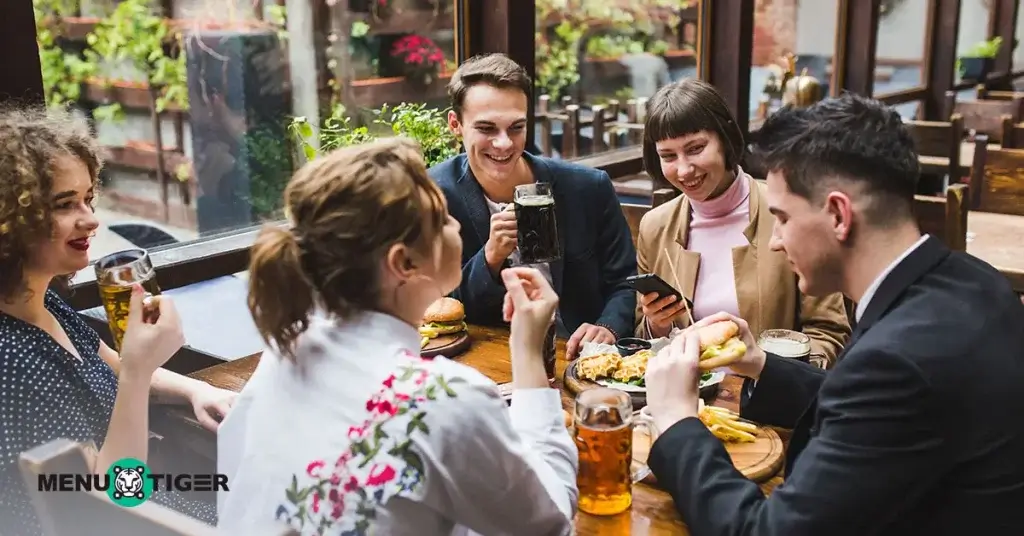
For marketing and creating buzz, it’s common to invite local leaders, neighbors, business owners, and other prominent figures in the area, or some just visit naturally. This can open doors to future partnerships, restaurant investors, or referrals.
Having a representative from the Chamber of Commerce or a local official attend can also add credibility and legitimacy to your business.
4. Anchor location in people’s minds
People often drive past storefronts without “seeing” them. A grand opening with balloons, music, or outdoor signage creates a “landmark” effect. Even if someone doesn’t stop on that day, their brain registers exactly where you are for the next time they need your business.
5. Gain free marketing
Grand openings are inherently “sharable.” When people see a crowd or have a new experience, they take photos and post them on social media. This user-generated content acts as a free advertisement to their friends and family, effectively doing your marketing for you.
Soft opening vs grand opening: What experts recommend?
Industry experience and business guides strongly recommend a soft opening before a grand opening, emphasizing the key differences in soft opening vs grand opening
Here’s why:
- Soft openings allow restaurant owners to evaluate operational processes and systems before opening to the public (Franchise Detail, 2025).
- Early guests can post reviews and share their experiences online, helping build anticipation and awareness ahead of the official launch (Indeed, 2025).
- A successful grand opening requires adequate preparation, which often includes conducting a soft opening first to minimize operational risks (Restaurant Dive, 2024)
- Customers attending grand openings are less likely to provide candid feedback, making it more difficult for businesses to identify and improve early service issues (Askdifference, 2024)
Taken together, these findings point to one key conclusion in the soft vs grand opening debate: going straight to a grand opening is a high-risk gamble because restaurants only get one chance to make a strong first impression.
If a kitchen appliance fails or a checkout system glitch during a heavily marketed grand opening, the resulting customer frustration can significantly reduce the likelihood of return visits.
Key considerations for skipping a soft opening
You can go straight to fully opening to the public if:
1. Immediate cash flow is crucial
If you’re an existing business that just got new restaurant kitchen equipment or a fresh look, you already know how to run the shop. Since your team and your food haven’t changed, only the “tools” you have can usually handle a full opening without a rehearsal.
2. The model is a cart or street-food business
For street food, your window is your billboard. Once that window is up, passersby perceive you as fully open. You can’t really “practice” in public because if people see you, they expect to eat. If you turn them away during a rehearsal, you lose that impulsive sale and might ruin your first impression with someone standing right there.
3. Service is simple
If your concept is a ghost kitchen, a pop-up, or a high-speed kiosk, your workflow is often much simpler. With a limited menu and no dining room to manage, there are fewer “moving parts” to break, making a full opening much less risky.
4. Equipment or environment has been modified
If you’re an existing business that just got new restaurant kitchen equipment or a fresh look, you already know how to run the shop. Since your team and your food haven’t changed, only the “tools” you have can usually handle a full opening without a rehearsal.
5. Launching at one-time or high-traffic events
If you are opening at a big festival, a holiday market, or a short-term pop-up, you only have a few days to make your mark. In these cases, you have to hit the ground running because the event will be over before a “soft opening” would even be finished.
5 core strategies for a successful restaurant opening
To ensure it goes smoothly and sets the tone for future success, careful planning and execution are key.
Here are 5 core strategies for a successful restaurant grand opening:
1. Use a restaurant management system
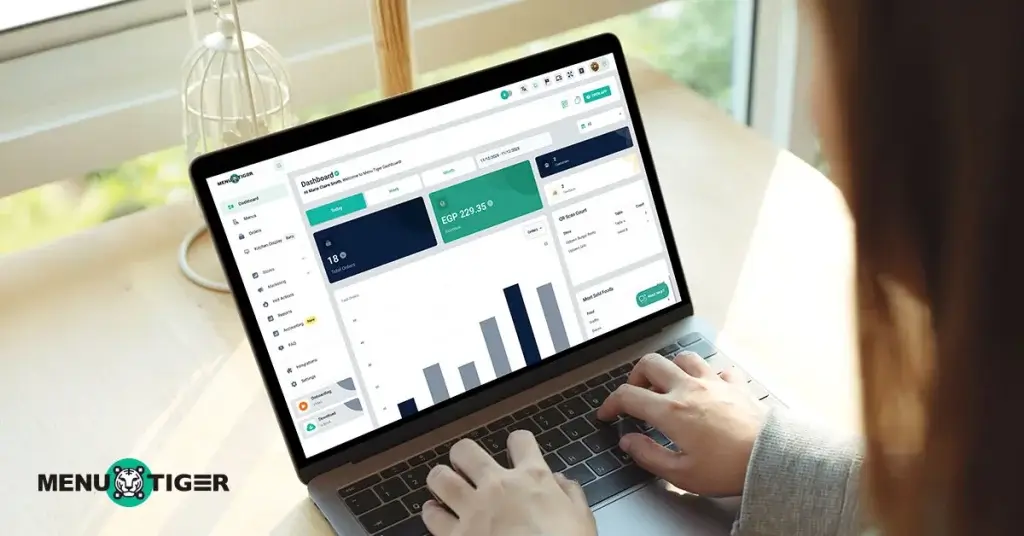
No matter what type of restaurant event you host, it is important to have a restaurant management system nowadays.
Trust that this will be your number-one support system on even the most demanding days, as this has several helpful features, such as:
- Digital survey and feedback
- Menu management and templates
- Accounting feature, sales analytics, and insights
- Smart integrations and online payments
- Marketing tools
- Service-support features
- Kitchen display system and digital menu
Use the restaurant management system to collect data such as sales, number of orders, and best-selling items, gather feedback through digital surveys, ensure smooth workflow from the front of the house to the back of the house, and make data-driven decisions.
2. Host a soft opening
According to Lightspeed, it’s standard industry advice to hold a soft opening before grand opening.
This step is crucial because a successful grand opening relies on ironing out operational issues, training staff, and ensuring that both customer service skills and food quality are at their best.
To make the most of a soft opening, always create a goal checklist.
Ask questions like:
- Is all the equipment functioning properly?
- Can the kitchen handle 10 items in a single order?
- Is food consistently cooked and plated correctly?
- Are orders processed accurately and efficiently?
- Is the service timing smooth from the kitchen to the table?
After the soft launch, always review feedback from customers and hold a meeting with your team to discuss bottlenecks and possible solutions.
As the owner, don’t get overwhelmed—stay focused on the main purpose of the soft opening: identifying issues, improving operations, and ensuring your restaurant is ready for a successful grand opening.
3. Optimized digital footprint
In 2026, most diners “eat with their phone” before they even step into a restaurant. Every launch or marketing effort needs to have a strong online presence.
Use your social media profiles and Google Business listing to showcase photos from your restaurant, highlight menu items, and share positive reviews from pre-launch events. Consider creating short videos, behind-the-scenes content, or interactive posts to engage your audience.
The goal is to make potential diners feel familiar with your restaurant before they arrive, build anticipation, and turn online interest into real foot traffic on launch day.
4. Community and local integration
Most people are drawn to restaurants not just for the food, but for the community experience. For your launch, invite local influencers, well-known personalities, and business owners.
Hosting a collaborative event such as tastings, mini-workshops, or demonstrations helps build goodwill, cross-promotes local businesses, and increases your restaurant’s visibility.
This approach positions your restaurant as a connected, supportive member of the community, encouraging word-of-mouth marketing and long-term patronage.
5. Form a strategic partnership
To accelerate traffic and revenue, strategically partner with a business or restaurant whose brand aligns with yours and already commands a loyal following. Such a collaboration allows you to leverage their established customer base.
You can either collaborate with a popular merchandise shop to provide branded freebies or, if you are a café, partner with a well-known bakery.
This strategy helps drive immediate foot traffic and increases the chances of gaining new, long-term customers.
Go soft or go big: Start where
By understanding the distinct roles of a soft opening vs grand opening, you give your restaurant the best possible chance to thrive in the competitive 2026 market.
Remember, you only get one chance to make a first impression.
It’s time to launch your restaurant with confidence—a confidence that doesn’t come from wishful thinking, but from thorough preparation, data-driven decisions, and the assurance that your team and restaurant order management system are ready to deliver a seamless experience from day one.