
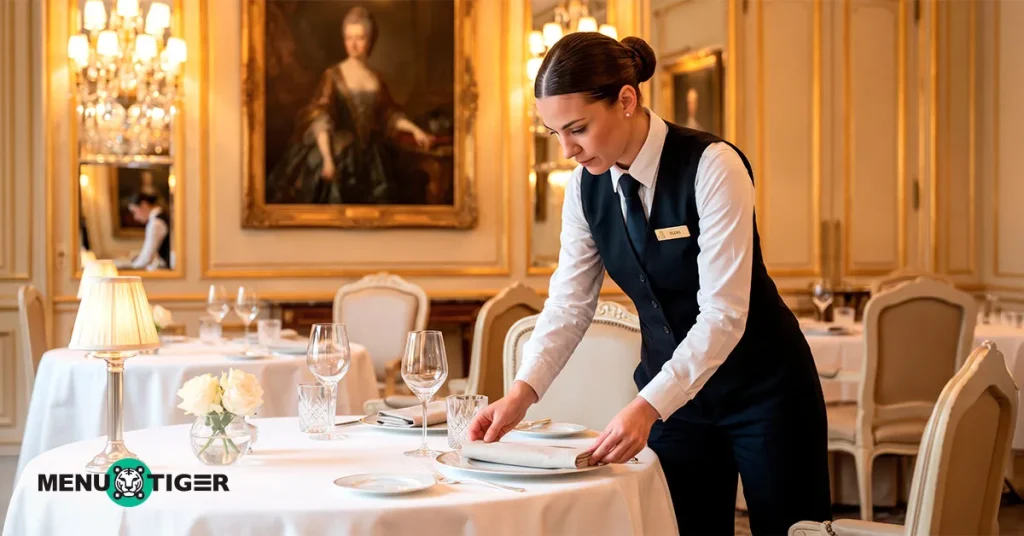
There are several ways to set a table, all with different requirements, service styles, and use cases.
Using the right one avoids clutter and creates a seamless dining experience, making it important for managing your establishment’s inventory and establishing your brand.
Key Takeaways
| 1. There are 3 fundamental table setting styles: basic, casual, and formal, that differ based on the number of courses being served and the amount of tableware used. 2. Utensil placement follows a strict rule: forks go on the left, knives and spoons go on the right (blade facing the plate), and everything is arranged outside-in based on order of use. 3. Beyond the 3 standard styles, there are 5 special setups, namely: al fresco, banquet, breakfast, buffet, and family-style, each suited to a different dining occasion or service format. 4. Culture also shapes table setting, with distinct American, Asian, English, French, and Russian approaches to placement, service order, and tableware. 5. The right table setting depends on your restaurant’s style, menu, and budget, not just tradition, so it’s worth reassessing your setup based on what you actually serve. 6. Common mistakes like overcrowding, missing utensils, tall centerpieces, and incorrect placement can undercut an otherwise good table setting, so consistency matters as much as design. 7. A polished table setting works best alongside efficient back-of-house tools, like a QR code menu or online ordering system, to keep service smooth once diners sit down. |
The basics of restaurant table setting
A restaurant table setting is built from a consistent set of tableware and a handful of placement rules.
Tableware you’ll need:
- Forks, such as dinner forks and cake forks
- Spoons, such as dinner and soup spoons
- Knives, such as dinner and butter knives
- Plates, such as a charger and bread plates
- Glassware, such as water and wine glasses
- Napkins
Placement rules to follow:
- Set the utensils in the order your guests will use them, from the outside in.
- Place forks on the left side of the plate.
- Place all knives on the right side of the plate, with the blade facing the plate. Butter knives are exempt from this as they are placed above the plate.
- Place spoons to the right of knives.
- Align utensils by their bottoms.
- Maintain a gap of at least one inch between each utensil.
- Avoid setting utensils that won’t be used to eat the dishes you will be serving.
- Leave enough room for any condiments, QR code menu or centerpieces, if possible

How to set a table: Basic, casual, and formal styles
There are three fundamental ways of setting a table: basic, casual, and formal. They differ in the number of tableware used and what kinds of courses they are meant for.
1. Basic Table Setting
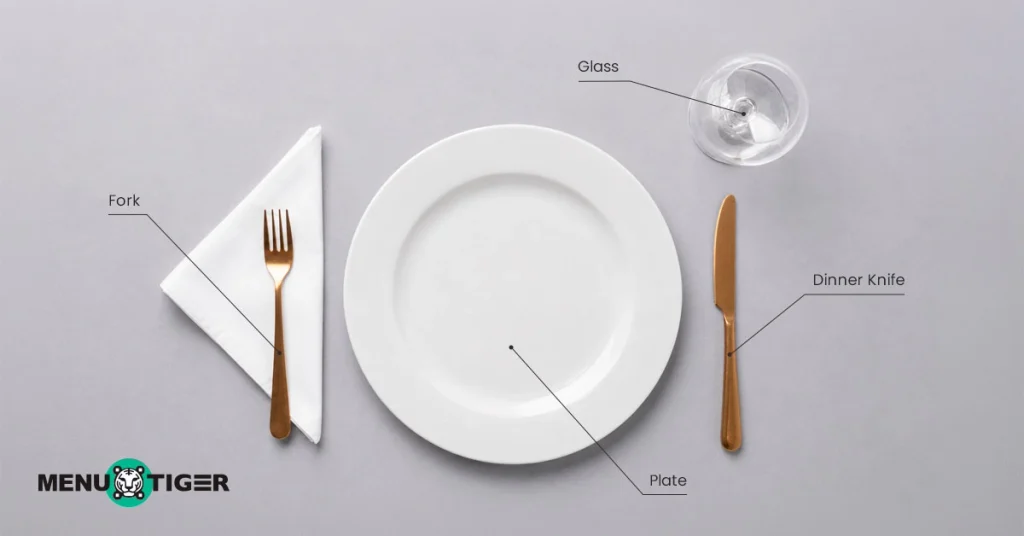
Also known as the à la carte setting, the basic table setting is the simplest way of setting a table.
It works well when serving a single-course meal while making diners feel welcome.
The tableware you will need in a basic table setting includes:
- Serving plate
- Napkin
- Fork
- Knife
- Spoon (optional)
- Water glass or coffee cup
To create a basic table setting, follow the steps below:
- Place the serving plate in the middle of the table setting.
- Place a napkin to the left of the plate.
- Lay the fork on top of the napkin.
- Place the knife and a spoon to the right of the plate.
- Place a water glass or coffee cup above the knife and move it slightly to the right.
2. Casual Table Setting
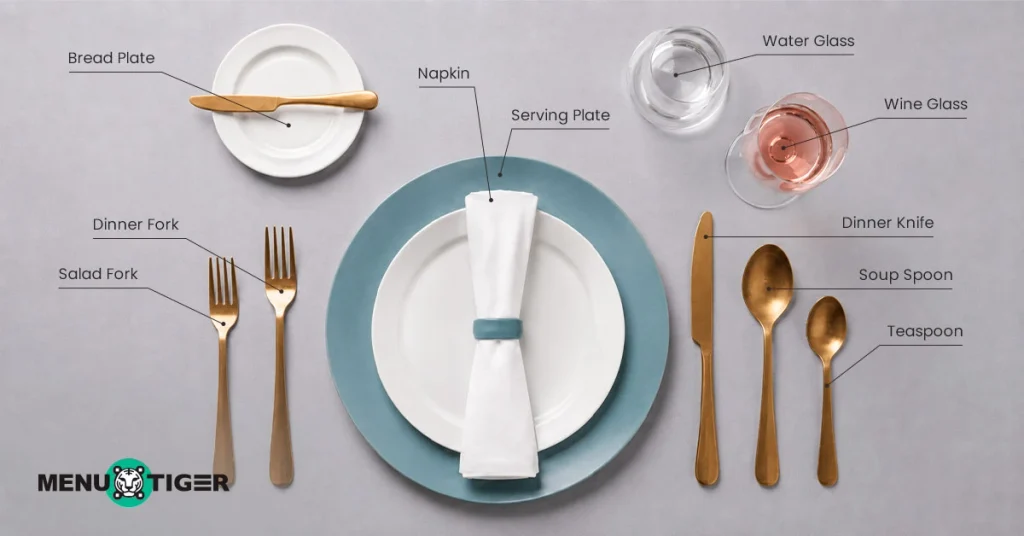
This kind of table setting layout is designed for multi-course meals, typical in casual and full-service restaurants.
The tableware you will need in a casual table setting includes:
- Serving plate
- Bread plate
- Salad fork
- Dinner fork
- Butter knife
- Dinner knife
- Soup spoon
- Dinner spoon
- Water glass
- Wine glass
To set your table casually, follow these steps:
- Place the serving plate in the middle of the table setting.
- Add a bread plate above and to the left of the serving plate.
- Place a butter knife on top of the bread plate, blade facing down and the handle facing right.
- Place a salad fork and a dinner fork to the left of the serving plate, with the salad fork on the outside and the dinner fork on the inside.
- Place a dinner knife, soup spoon and tea spoon to the right of the serving plate, with the tea spoon on the outside, the dinner knife on the inside and the soup spoon in between.
- Place a water glass above the dinner knife.
- Place the wine glass to the right of the water glass.
3. Formal Table Setting
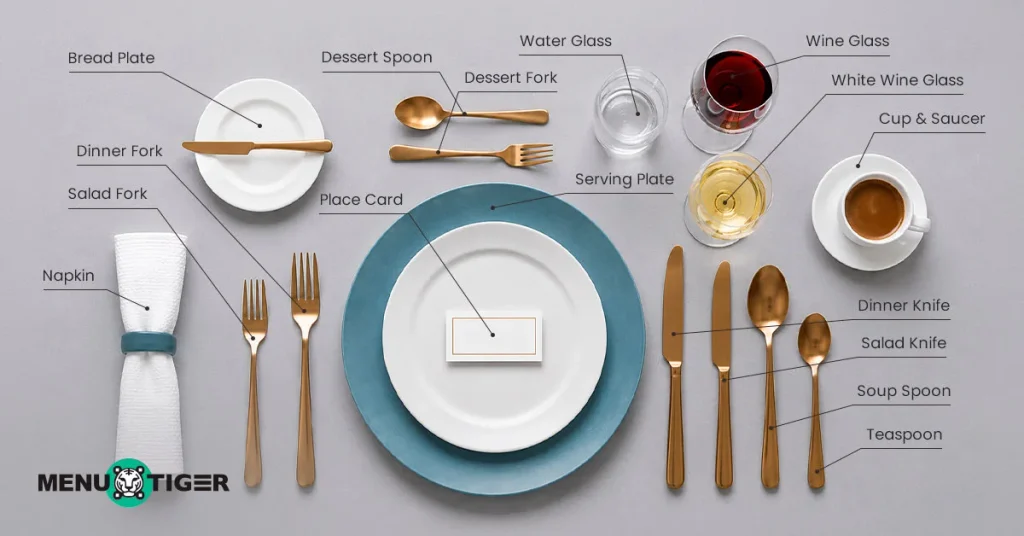
Formal table settings are often seen in fine dining restaurants and formal events. They are designed for a six-course meal, employing more utensils and glassware than either the basic or casual table setting.
The tableware you will need in a formal table setting includes:
- Tablecloth
- Serving plate
- Charger plate (optional)
- Bread plate
- Salad fork
- Dinner fork
- Butter knife
- Dinner knife
- Salad knife
- Soup spoon
- Dinner spoon
- Teaspoon
- Water glass
- White wine glass
- Red wine glass
To set your table formally, follow the steps below:
- Place a tablecloth on the table.
- Place the serving plate in the middle of the table setting. Optionally, you can also place a charger plate underneath the serving plate.
- Add a bread plate above and to the left of the serving plate.
- Place a butter knife on top of the bread plate, blade facing down and the handle facing right.
- Place a salad fork and a dinner fork to the left of the serving plate, with the salad fork on the outside and the dinner fork on the inside.
- Place a dinner knife, salad knife, soup spoon and tea spoon to the right of the serving plate, with the tea spoon on the outside, followed by the soup spoon, salad knife then dinner knife.
- Place the dessert spoon horizontally above the serving plate, with the handle towards the right.
- Place a water glass above the dinner knife.
- Place the white wine glass below and to the right of the water glass.
- Place the red wine glass above and to the right of the white wine glass.
- Place a cup and saucer above and to the right of the soup spoon.
- Check if all flatware is evenly spaced and that their bottoms line up with the bottom of the serving plate.
5 special ways to set a restaurant table
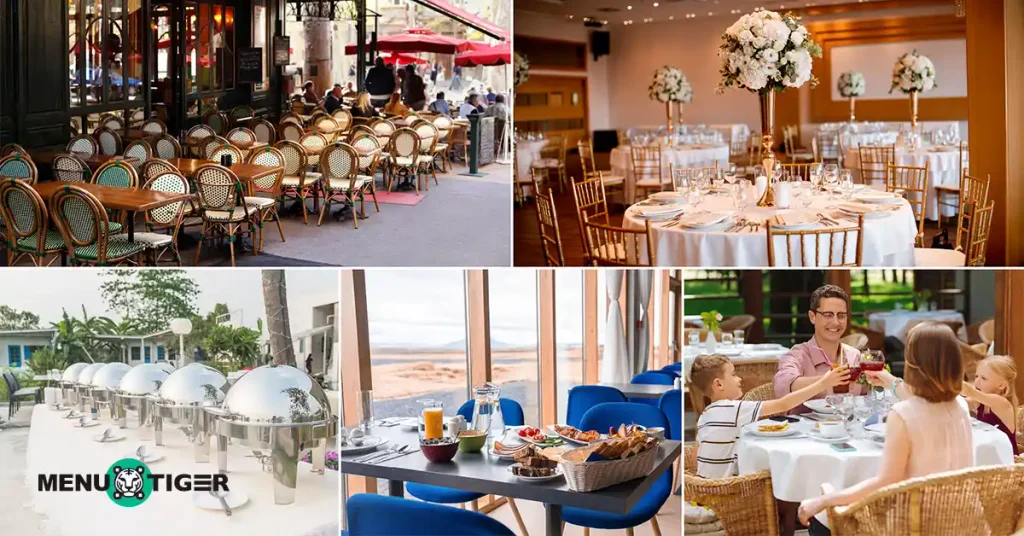
Beyond the three standard table settings, five variations are influenced by the types of menu and service they are involved in.
1. Al Fresco
Al fresco is an Italian term meaning “in the fresh air” or “in the shade”. This style of dining (also known as outdoor dining) sets a scenic and comfortable ambiance.
In an al fresco dining setup, the manner of table setting will depend on the number of courses diners will be eating. However, it should always use tableware capable of resisting the weather while still looking aesthetically pleasing.
Tableware to use when al fresco dining includes:
- Table mats resistant to the weather
- Wider glasses to counter the wind
- Napkin rings that hold napkins while outside
- Basic flatware and cutlery
2. Banquet
Setting tables for a banquet requires arrangements designed for groups of diners. This is typical in seminars, conferences, weddings and other large events.
Spacing is important in banquet table setting, as overcrowding a group dinner creates a suffocating and restrictive ambience.
Tableware to use in a banquet includes:
- Tablecloth for banquet tables
- Napkins
- Basic flatware, glassware and cutlery depending on the courses to be served
3. Breakfast
A breakfast table setting is very similar to the basic one, except for the addition of a soup or cereal bowl (if they are being served) as well as a bread plate. A cup and a saucer for coffee or tea will typically accompany glassware.
Tableware to use during breakfast includes:
- Serving plate
- Bread plate
- Soup or cereal bowl
- Napkin
- Fork
- Knife
- Spoon
- Water glass
- Coffee cup
4. Buffet
A buffet-style table setting is a dining arrangement that prioritizes movement and accessibility. Often seen during large events, it is unique in that diners pick up their own plates and bowls.
Typically, only a dinner spoon, fork, and knife are set on the table, all wrapped up inside a napkin. However, additional types of cutlery and flatware are available at stations throughout the buffet.
A water glass is also placed for every chair, with other types of glasses available at buffet counters.
Tableware to use during buffets includes:
- Tablecloth
- Serving plate
- Charger plate
- Bread plate
- Salad fork
- Dinner fork
- Butter knife
- Dinner knife
- Salad knife
- Soup spoon
- Dinner spoon
- Teaspoon
- Water glass
- White wine glass
- Red wine glass
5. Family-style
A family-style table setting involves basic or casual dining with large serving dishes and platters placed at the center of the table. To make room for all the food, tableware won’t be as fancy as formal settings, instead consisting of basic flatware and cutlery.
Thus, a family-style setting will typically use the following tableware:
- Serving plate
- Napkin
- Fork
- Knife
- Spoon
- Water glass
Culture-specific table setting methods
These table settings are influenced by certain cuisines and how their cultures traditionally serve dishes.
American
The American table setting ranges from basic and casual, often depending on the restaurant’s serving style. It is designed for quick and efficient service.
As such, there are forks on the left, while the knife and spoons are on the right. If a salad is being served, a salad fork is placed before it is brought to the table.
Asian
While Asian restaurant table settings can vary by country, they share many elements that distinguish them from other arrangements.
For starters, instead of a serving plate, a small rice bowl is used to hold food. Smaller bowls for sauces and side dishes are also set at the beginning or are served throughout the meal.
Secondly, chopsticks are a common utensil used primarily in Asian restaurant dining ethics. These are often placed on a rest to the right of the serving bowl. Another unique utensil is a ceramic soup spoon that is either placed alongside the chopsticks or in the rice bowl.
Lastly, a small teacup without a handle can be added to the arrangement.
English
English table service is very similar to the family-style of setting a table, wherein dishes and platters are set in the middle of the table.
Typically, the host will be seated at the head of the table, where they carve the main meat before serving it to the guests.
French
The French style of setting a table is known for being elegant and elaborate, which is why it is similar to the formal type of table setting.
Something to keep in mind when setting a table in a full service restaurant using this style is that forks are often placed with their tines facing down. Additional types of utensils can be set as well, such as cheese knives or snail forks.
Russian
Another variation of the formal table setting, the Russian table setting, involves a charger plate that stays throughout the meal. Dishes and appropriate flatware are then served every course, being placed in front and to the right of the diner.
How to choose the best table setting for your restaurant
The best table setting for your restaurant will be the one that matches your menu, restaurant theme and service style. This way, you will be able to accommodate the appetites of your diners without appearing disorganized.
To help decide which table setting to use, ask yourself the following questions:
- What style of restaurant are you running?
- What is the restaurant’s theme?
- What kind of food are you serving?
- Does your table setting leave diners with enough room to eat comfortably?
- Does the necessary tableware fit within your budget?
Common restaurant table setting mistakes to avoid
Table setting can get complicated, but it can be mastered by avoiding the following mistakes.
Crowding the table
Even in formal table settings, overcrowding your table can make the dining experience very uncomfortable for your guests.
Placing too much tableware can be wasteful because diners won’t always use every utensil or plate you set.
What to do: Leave at least 24 inches of dining space for every guest at the table. Take out vases or centerpieces that will take up space when the table is finally set.
Forgetting the necessary tableware
Never leave your customers wanting for a specific utensil. This forces them to either call and wait for a server to give them the utensil they need, or they have to stand up and look for one themselves.
What to do: Practice good customer service by never leaving the kitchen without the appropriate utensils being prepared. If you are bringing a steak to a customer, remember to set a steak knife before service or bring one along with the steak.
Using tall centerpieces
Even with a proper table setting, using tall centerpieces can interrupt the flow of conversation between diners. It can also be very distracting and claustrophobic, distracting customers while they eat.
What to do: If a centerpiece is necessary to complete the table, then use ones that don’t disrupt the customer’s view of their fellow diners, especially the ones they’re eating with.
If you don’t really need a centerpiece at all, consider removing it to make room for condiments and linens.
Setting utensils incorrectly
In a table setting diagram, placing forks, knives, and spoons in the wrong places, facing the wrong directions, can give diners pause, forcing them to rearrange their utensils correctly.
This not only creates a disorganized dining experience but also reflects badly on your establishment.
What to do: Remember that forks always go to the left of the plate while knives and spoons go to the right. Additionally, a knife’s blade should always face the plate, while spoons are always to the right of the knife.
Using the wrong glassware
The glassware set for diners should match what drinks you will serve them. Otherwise, you risk looking unprofessional and unknowledgeable.
What to do: Learn about different glassware, their differences, and what each is used for. For example, red wine glasses are broader to allow the wine to mix with more air, while white ones are thinner to preserve their more subtle aromas.
How an online menu ordering system ties into your table setup
Once the table is set, the next thing your guests will do is the menu itself, and increasingly that means a menu QR code rather than a printed one.
Pairing your table setting with an online ordering system like MENU TIGER lets diners access dishes, customize their orders, and pay using their mobile phones.
Aside from that, the system comes with a table management feature that lets each table carry its own unique QR code, so raiders placed at specific seats are automatically routed to the right table number in the kitchen.
This means your carefully arranged table setting is not just for aesthetics but a part of a smooth and faster service flow, cutting down on mixed-up orders and long wait times.
The table is just the start
A well-executed restaurant table setting takes knowing the tableware, the placements, and the layout your menu calls for. This can get tricky, especially with so many, but the complexity of table setting will ultimately rely on your menu and service style.
However, it is only one piece of the bigger picture. Having efficient staff and operating an online menu ordering system can help retain diners drawn in by your branding.
Still, table setting serves as an introduction to the quality of your service and is an indication of how well-run your establishment really is.