
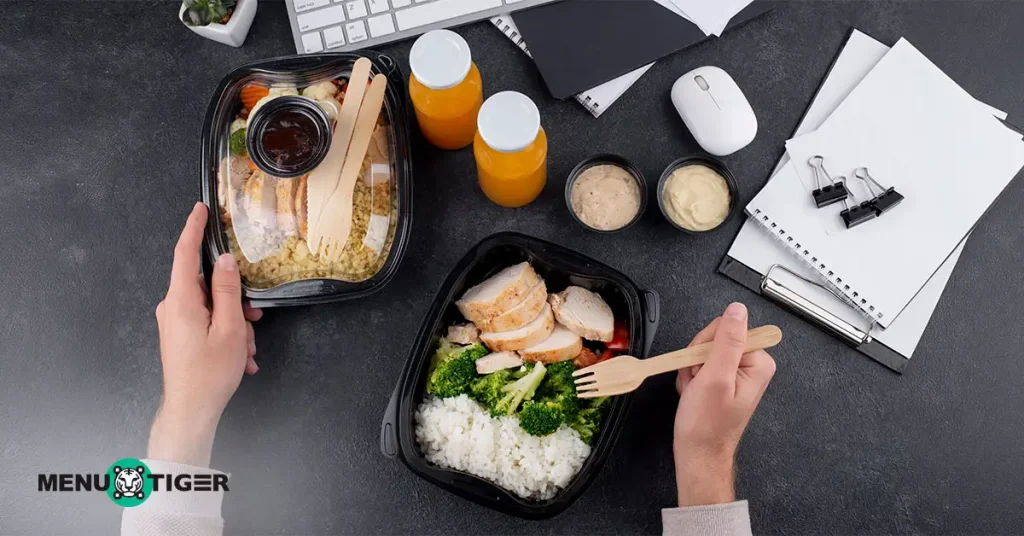
Off-premises dining is mainstream in the restaurant industry today, driven by surging demand for consumer convenience.
The National Restaurant Association report shows that 47% of adults reveal they pick up takeout from restaurants.
This data suggests that restaurants should prioritize ideal takeout diner ideas and offerings for their target audience.
To keep up with the consumers’ demand, restaurant technologies are no longer an option but a necessity. This will foster an efficient restaurant ordering system and aid in providing good and speedy customer service.
6 tips for better food for dinner takeout setup
To have positive reviews about your takeaway setup, check out the following tips:
1. Customization
Using smart QR code menu software allows customers to personalize orders by choosing sides, add-ons, and modifier options (e.g., spiciness and sugar level).
To ensure accuracy, it has a feature allowing diners to provide specific instructions like “no mayonnaise” or “add more cheese.”
This lets them clearly communicate their preferences, especially for patrons with allergies and dietary restrictions, reducing order errors.
2. Fresh ingredients
Aside from good texture and vibrant natural flavor, fresh ingredients give higher nutritional value.
This allows you to cater to a broader audience, especially health-conscious individuals.
Unlike processed and preserved foods, fresh produce limits your intake of sodium and chemical preservatives.
In fact, Pew Research Center data shows that 52 percent of Americans prioritize the healthiness of food when deciding what to eat.
Therefore, highlighting fresh farm-to-table ingredients in your menu is your edge over other competitors.
3. Durable with spill-proof lids packaging
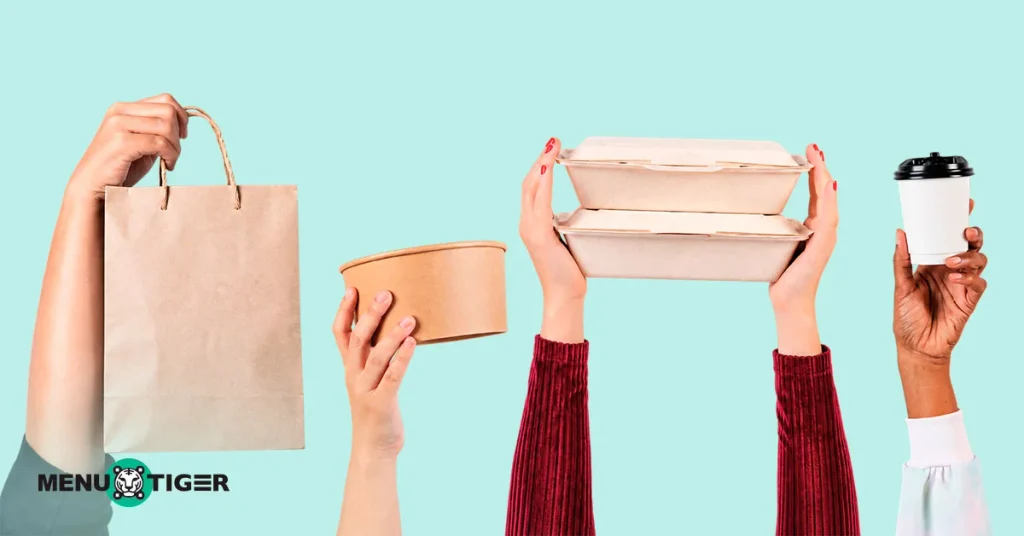
Customers expect food to remain intact when it arrives at the place they intend to eat it. The other way around, this could lead to frustration, which will negatively impact your brand.
To prevent this from happening, make sure the container is durable with a leak-proof design to avoid spills and leakage.
Secured packaging is essential for transporting liquids like soups, sauces, and beverages.
4. Travel-friendly
Curate a specific menu for takeaway and choose foods that can maintain their quality during transport.
Meat-based or vegan burgers, sandwiches, grilled dishes, pasta, and rice meals are some of the ideal foods for takeout since they do not become soggy quickly.
And to help preserve the food’s texture, separate sauces, dressings, and toppings whenever possible.
5. Temperature retention
Choosing the right container is essential to preserving the food quality and temperature.
Here are different types of to-go containers with their qualities and best use cases.
Aluminum: Heat-retentive and oven-safe; best for hot foods like soups and curries
Plastic: Microwave safe and lightweight; ideal for cold beverages and desserts
Insulated paper: Eco-friendly and compostable; suitable for desserts and soups
6. Heat-and-eat meals
Consider heat-and-eat meals that can be frozen or refrigerated. This is convenient for customers who want to purchase meals in advance and consume them later because of its longer shelf life.
This appeals to a wider audience seeking convenience, like working professionals or students.

Takeout dinner ideas: Easy prep items
Whether you are building your menu from scratch or revamping it, check out the following takeaway menu ideas:
Asian cuisine
Due to globalization, American dining has evolved, embracing different culinary styles like Asian cuisine. With its distinct flavor and ingredients, it has become an essential dish in casual dining or even in celebrations.
There are roughly 12 percent of all restaurants in the United States that serve Asian food; 71 percent of these Asian restaurants are Chinese (the most common), Japanese, and Thai, according to the Pew Research Center.
This data proves the growing popularity of Asian cuisine in the United States and how it influences the American dining experience.
Chinese food
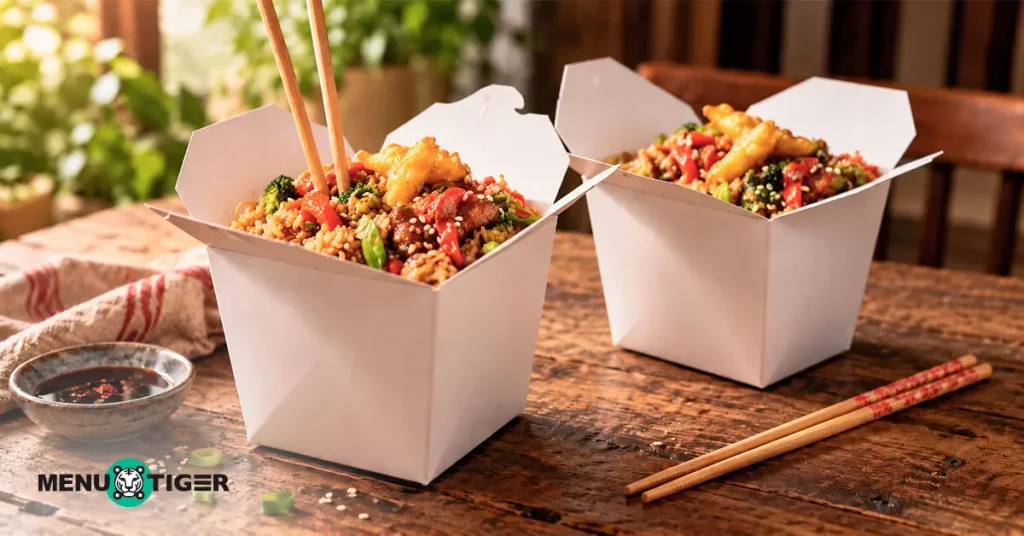
Chinese food often highlights sweet and sour sauces, frequent use of garlic and oil, and unique ingredient combinations that appeal to American culinary tastes.
In fact, it consistently ranks near the top of national favorites, with 78 percent of Americans who try Chinese food liking it, according to YouGov survey findings.
Here are some popular Chinese restaurant menu ideas you may consider:
- Potstickers (Chinese dumplings)
- Chinese Egg Rolls
- Sesame Beef
- General Tso’s Chicken
- Char Siu (Chinese barbecue pork)
- Chinese Black Pepper Beef
- Lemon Chicken
- Steamed Fish with Ginger
- Egg Fried Rice
- Honey Walnut Shrimp
- Chinese Orange Chicken
- Beef and Broccoli Stir Fry
Japanese food
Japanese is one of the most popular Asian cuisines in the U.S., with 74 percent of U.S. natives declaring they like Japanese food, according to a YouGov survey.
The Americans’ love for Japanese food is driven by ingredient purity and balanced umami flavors.
“Its visual presentation, its expression of the seasons, and its respect for ingredients make it more than just food; it is a cultural art form that resonates deeply with people around the world,” says Mitsunobu Nagae of l’abeille, the Michelin-star French–Japanese restaurant in Tribeca.
Hence, if your targeted demographic preference is Japanese food, take a look at the following easy-to-prepare Japanese takeout dinner ideas:
- Salmon Kushiyaki
- Japanese Curry
- Negimaki
- Katsudon
- Takoyaki
- Chirashizushi
- Yakitori Negema
- Katsu Curry Ramen
- Shrimp and Vegetable Tempura
- Gyudon
- Japanese Shrimp Fried Rice
- Soba Noodle Veggie Bowl
Thai food
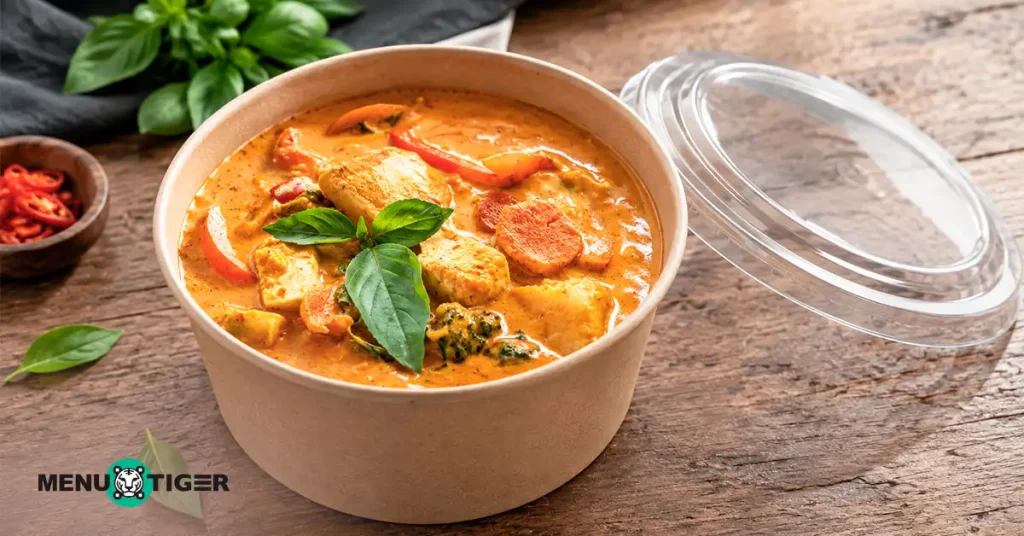
Thai dishes are known for their rich flavor created from fresh ingredients, fragrant spices, and traditional recipes.
Its bold flavors and culinary tradition made it one of the favorite cuisines for many people.
In the U.S. alone, there are 823,000 monthly Google searches for Thai food, following Chinese and Japanese cuisine. With its large search volume, it suggests Americans’ interest in this Asian cuisine.
Check out the following Thai recipes:
- Thai Cashew Chicken Stir-Fry
- Thai Yellow Curry
- Pad See Ew Chicken
- Pad Thai
- Yum Woon Sen
- Massaman Curry
- Pineapple Fried Rice
- Som Tum
- Moo Ping
- Thai Satay
- Thai Green Curry with Chicken
- Tom Kha Gai
Mexican food
Years of cultural exchange and migration have helped Mexican culinary traditions become deeply integrated into American food culture.
Adults aged 20 to 59 years old consume at least one Mexican food on any given day, according to data from What We Eat in America (WWEA) and the National Health and Nutrition Examination Survey (NHANES) from 2017 to March 2020.
This implies how including a Mexican menu in your Friday night dinner ideas can make a difference in customers’ ticket value.
Here is a list of items you can add to your Mexican menu takeaway selection.
- Chilorio
- Pork Enchiladas
- Tetelas
- Quesabirrias
- Chicken-Stuffed Tortillas
- Cauliflower Tacos
- Salsa Chicken Thighs and Rice
- Crispy Beef Tacos
- Pork Carnitas
- Tex-Mex Salad
- Chicken Mole
- Burritos
Healthy alternatives to takeout ideas
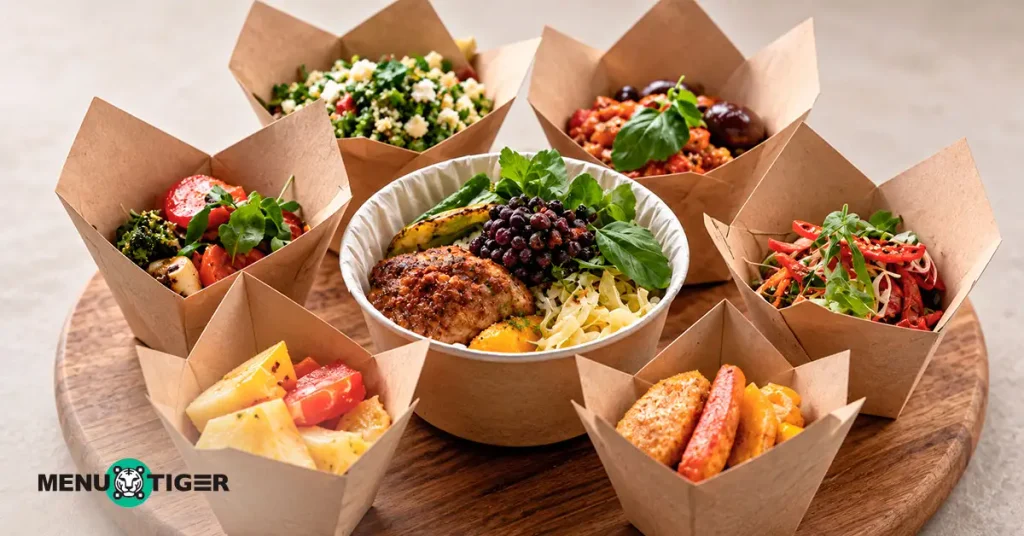
Eating healthy foods is becoming conventional. Pew Research Center data shows about 52 percent of U.S. adults say the food’s healthiness is very important when deciding what to eat.
This suggests an opportunity for restaurants to specifically craft a healthy menu to meet consumer preferences.
For optimum flavor and quality, only use fresh ingredients. Consider plant-based items that are fast and easy to prepare.
This will widen your customer coverage, appealing to those who are health-conscious or follow certain lifestyles, like vegan and vegetarian.
And to entice new customers, offer special happy hour Friday night meal takeaway packages, or family-friendly meal kits; this can boost average ticket size.
Here are some plant-based main course recipes you can add to your menu:
- Buffalo Chickpea Cauliflower Tacos
- Parsnip And Potato Farinata Slices
- Cauliflower Raw Slaw With Turmeric Quinoa
- Oil-Free Baked Parinata Slices
- Stuffed Pepper With Beet And Sunflower Seeds
- Vegan Burger And Patties
- Cauliflower Burritos
- Lentil Patties
- Tuscan Chickpea Pot Pie
How a smart QR code menu optimizes takeaway orders
QR code restaurant technology provides customers and operators with seamless, more efficient ordering processes.
Customers do not need to stand in long queues to place and pay for orders; they can do it from the comfort of their respective seats.
After scanning the QR code, they can pick and add items to the cart. Afterward, they can choose the “takeaway” order method, and once the order is placed, it is automatically sorted by order method (takeaway, dine-in, delivery, or pickup), which will appear in the kitchen display system that reduces your customers’ waiting time when placing orders while
This reduces customers’ waiting time when placing orders, while kitchen staff can efficiently manage orders since they get real-time updates of customers’ order details.
Offer takeout deals using QR code technology today
Takeaway food gives convenient dining for customers to enjoy meals wherever they want.
Knowing the ideal takeout dinner ideas—ranging from international favorites to healthy options—will let you curate the right menu options so that customers can indulge in different tastes and preferences.
To deliver a better customer experience, do not forget to consider food packaging and the choice of ingredients to provide great value for customers.
Lastly, take advantage of restaurant technologies to keep up with the hectic order demands, resulting in an efficient restaurant ordering system workflow.