
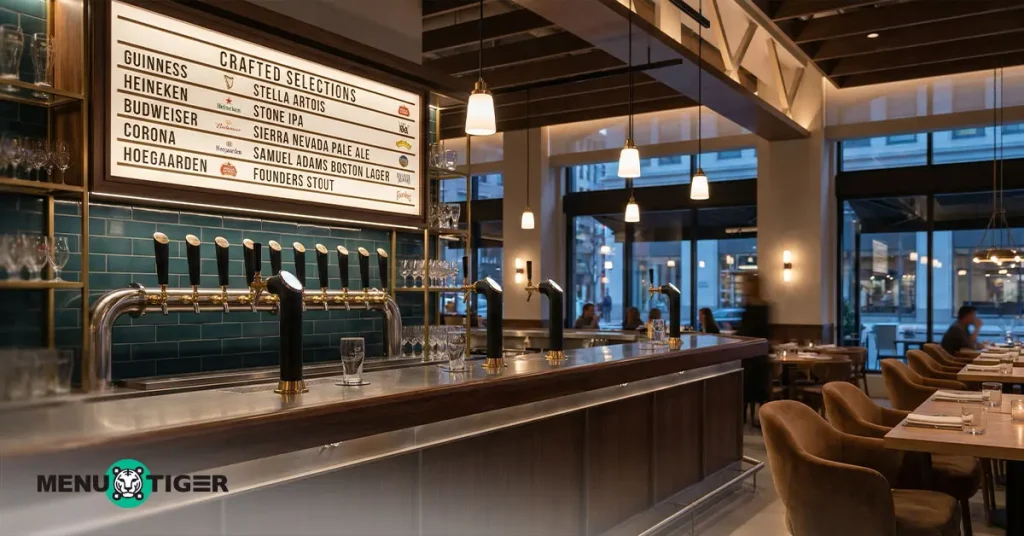
Your beer menu choices impact revenue, brand positioning, and customer experience.
With beer being one of the highest-margin items on bar menus, you want to optimize your menu offerings to drive repeat visits and elevate the dining experience. This is why you need a strategy before hopping on templates.
This guide covers how to create a menu that sells, choices you must make carefully, ways to differentiate your offerings, and display format tips across print and digital menus.
What makes a beer menu work?
A beer menu that works must meet specific selection, presentation, restaurant menu pricing and maintenance criteria consistently.
What defines the criteria depends on your target guest profile. Having a menu quality system ensures your menu is unique to your restaurant and reflects your brand’s essence.

The 9 menu choices for building the right beer offerings
These nine choices cover types of menu items, presentation, pricing, and maintenance:
1. The beer types and styles you carry
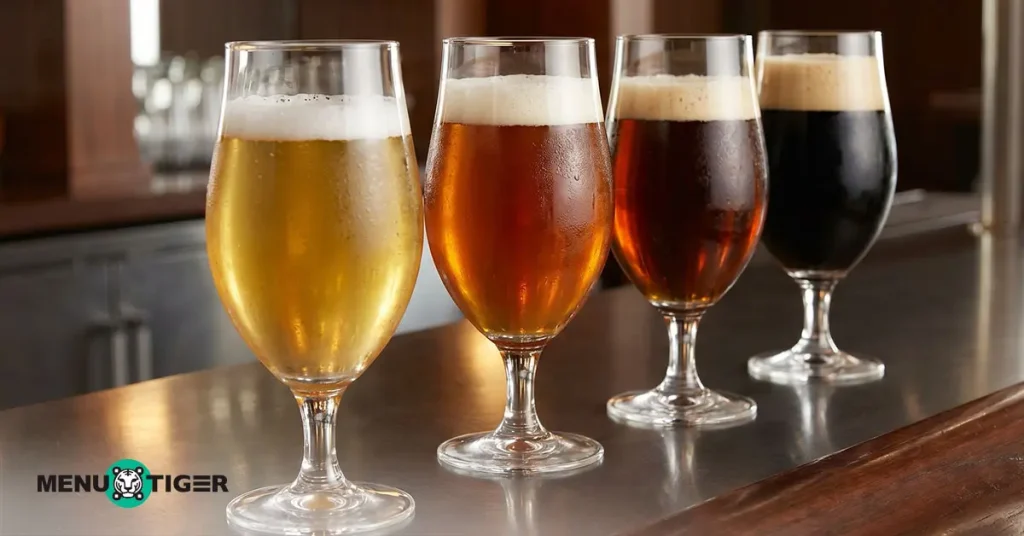
Beers fall into two types: ales and lagers. Every beer style your guests order, whether an IPA or a stout, traces back to one of these two types. And the distinction matters for menu building.
The type of beer you pick determines the range of the menu—and it is the style that gives the depth.
A menu that mostly features bold craft beer styles may lose the casual drinker who just wants something cold and easy. Likewise, a menu that centers on lagers may leave adventurous drinkers dissatisfied.
This is why it’s important to understand your guests’ profiles very closely and consistently study the market. Guests who find a beer they connect with on your menu spend more and come back.
2. The size of your beer collection
A diverse beer collection boosts revenue by appealing to a wider range of customers and making room for scaling premium offers.
However, while lagers hold the largest market share (about 76.1%), premium options widen profit margins (GrandView Research). This is what makes the balance both necessary and tricky.
Having a tailored, regularly updated inventory does more for your bottom line than a merely large collection. You want to optimize your offerings list to capture the breadth of top market demand at any point, rather than just expanding.
The spot to aim for is keeping your collection large enough to cover popular types and styles, but lean enough for it to feel tailored. Satisfying the desire for variety and quality must be balanced with thorough market surveys and inventory management.
3. Your beer draft setup
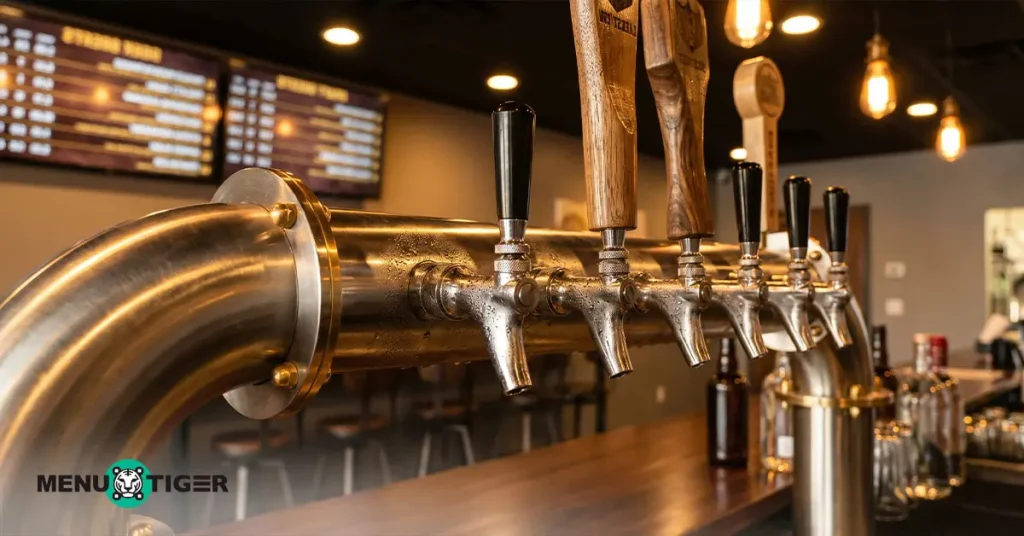
Even though the draft setup carries overhead cost, draft beers are significantly more profitable than bottled or canned beers.
For every $1 made from beer sales, draft beers carry a pour cost of $0.20, while the pour cost for bottled or canned beer sits around $0.25 (Backbar Academy). However, without a professional setup, you may see waste as high as 20%.
Estimates from Micro Matic show that an average keg contains 1984 ounces. At a price point of $6.00, draft system inefficiency and waste can eat up over $120 in profit for every keg. But a well-done setup can offer a yield of up to 99%.
4. Your local and seasonal options
Your local and seasonal menu themes or options offer an opportunity to create a signature experience and build loyalty, especially amongst regular guests.
A guest who finds a local beer they love at your restaurant is very likely to invite their associates for a drink. The additions included across seasons signal commitment to the satisfaction of guests.
Pulling this off requires building relationships with local breweries, planning seasonal additions in advance, and having a menu format that makes updates easy and inexpensive.
Seasonal offerings beyond the experience have been shown to increase orders by 26% (Restaurant Insider). You can have staff tell guests about limited-edition harvests to create a sense of exclusivity and urgency.
5. How do you describe each beer?
Beer descriptions should give guests a taste of the beer before they have a real taste. A study by Cornell University showed that menu items with vivid descriptions can increase sales by 27%.
Good descriptions help guests understand the experience they are getting before they place an order. It answers what it tastes like, how strong it is, and which foods it pairs well with.
This is why you should not be relying on the descriptions from distributor sheets. It is also important for the descriptions to be simple enough for servers to memorize and recommend. Staff knowledge of beers helps improve customer experience and satisfaction.
6. How do you price your beers?
Guests often define quality based on pricing. Pegging prices based on what competitors charge, marking up wholesale, or adopting distributors’ suggestions are not effective pricing strategies.
Effective pricing balances attracting customers with covering operational costs. It also gives guests a reference for understanding value. A low anchor serves as the reference point, a mid-range drives volume, and a premium tier lifts average check size.
The way prices are presented influences how customers feel about purchases. Prices should not be fixed based on just cost, but on how you want your customers to behave.
7. The visual appeal of your print and digital menu
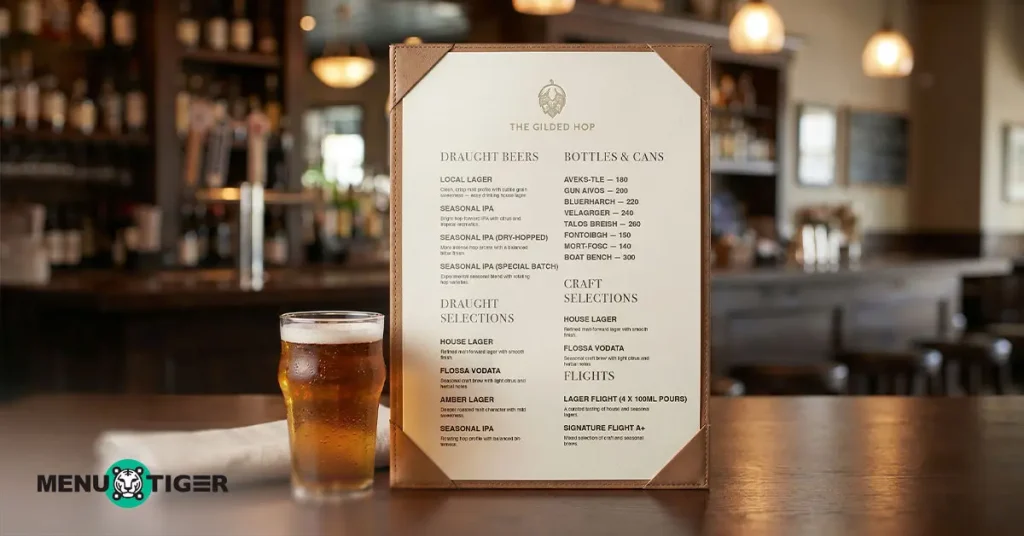
While menus are price lists, they are also important marketing assets that require a thorough creation process.
Snappr reports that having professional meal photos embedded in menus can boost sales by up to 30%. The aesthetics activate the mental experience of eating, triggering cravings and more purchases.
The visual appeal or design can also be built to justify pricing, as premium designs can serve as quality signals.
Additionally, printed menus can convey exclusivity, while digital menus can make the ordering experience a breeze. Depending on the demography of your guests, you can choose a digital menu for easy access, a printed menu for an elevated experience, or both.
8. Fit with your food menu.
If you have food and drink pairing ideas that perfectly pair with your main dishes, guests are more likely to order both, increasing the house’s total sales.
The secret to the best pairings is having the beer and the food help each other out. For instance, a crisp beer can be a nice accompaniment after an oily dish.
Every pairing should have a goal, from refreshing the taste buds to creating a distinct feel, bumping sales, or aligning with the seasons.
9. How current is your menu
Often, menus are updated to strike the right balance between popularity and profitability. A good rule of thumb is to refresh a certain percentage of your menu quarterly to match what’s in season, in demand, and current ingredient prices.
When adding or removing meals, it is important to look at the sales reports and factor in customer feedback. This will help decide what to remove, replace, reprice, or tweak.
Operational capacity should also be considered during updates. A kitchen that’s already operating at capacity may struggle to maintain standards when the demands of meals aren’t balanced out.
How to build a custom beer menu template
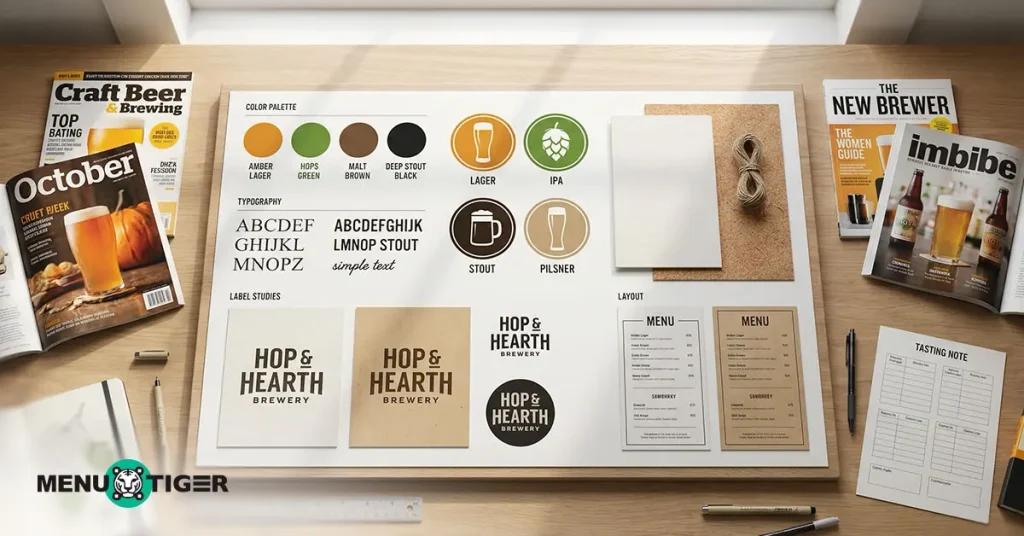
If all your template does is organize information, your menu will come off as generic. A custom template starts with the fundamentals, such as beer type, then layers in the brand’s identity markers.
Four things to take note of are categorization style, language use, visual appeal, and hierarchy of presentation.
Categorization style is about your audience.
The decision to organize by format or flavor is dependent on your audience. In menu engineering strategies, grouping by sensory categories works for all audiences as it allows customers to find exactly what they are in the mood for.
Language use determines what beer a guest will order.
When writing beer menu descriptions, avoid going into technical details and keep them simple, using food-based comparisons wherever possible. Make sure to include flavor words and small notes on pairing suggestions.
Visual appeal boosts your branding.
Create a library of color groups to be used for each category. You can place simple icons next to each beer list to complement the colors.
Presentation hierarchy or layout unifies your brand strategy.
It’s always best to keep it simple. You can start with the header, where you add your brand logo, then section headers, the beer block with placeholders, and then the special sections displaying options like local spotlights or staff favorites.
Menu display format tips: print and digital menus
- Format choice should be guided by where and how guests will read the menu.
- Use at least 1 inch of lettering height for every 10 feet of viewing distance on digital boards.
- Use dark text on a light background for maximum clarity in dim lighting.
- Use subtle animations or badges on digital boards to draw attention to new and high-margin seasonal beers.
- On digital displays, limit information to beer name, style, ABV, and price.
- Group beers on print menus by flavor profile to help guests select based on taste.
- Use high-quality textured paper like 350 gsm cardstock for print menus.

Building a beer menu that works for your bar
Building an effective beer menu requires treating it as an ongoing process rather than a one-time setup.
This means consistently assessing your menu against established criteria for selection, presentation, pricing, and maintenance.
Regular updates are also crucial—reprinting physical menus and editing a smart QR code menu as products change.