

A nearby company asks you to cater an upcoming event. By the time you send a quote, they’ve already chosen a different caterer. That order could have led to regular bookings.
Meals that suit the occasion and are delivered on time can earn you repeat business. Start by looking at what corporate catering involves and how it could work for your restaurant.
Here’s how to win office clients and manage orders alongside daily restaurant service.
Key takeaways
| – Price catering packages with this formula: Total cost ÷ (1 − target margin). – Set a booking cutoff and a separate deadline for headcount and meal substitutions. – Match catering orders to your kitchen’s capacity before you accept bookings. – Follow up with clients within a day of delivery and propose recurring orders, like weekly team lunches. |

What is corporate catering and why should restaurants offer it?
Corporate catering is food and beverage for workplaces and business occasions: team lunches, meetings, conferences, and company events.
Usually, one person, such as a manager, department lead, or an assistant, orders for an entire group within a set budget and schedule.
Many companies also bring in food to keep team morale up. In a 2025 ezCater survey, 86% of workplace decision-makers say providing food encourages teamwork, and 83% say it makes employees more productive.
For restaurants, these orders are larger than a typical takeaway ticket and introduce your food to customers who may not have dined with you before. Catering can grow restaurant revenue without adding a table to the dining room.
How to win corporate catering clients
1. Know who is placing the order
Office catering orders usually come from three kinds of buyers, and each cares about something different.
| Buyer | What they typically arrange | What matters to them |
| Office manager | Staff meals, regular meetings, and staff celebrations | Reliable arrival times, easy reordering, and budget control |
| Executive assistant | Client hospitality, executive events, and leadership meetings | Guests’ dietary preferences and food presentation |
| Workplace or facilities manager | Regular meal program and office-wide events | Consistent service that can accommodate changing attendance |
The occasion matters, too. Visiting clients usually call for a presented buffet, while a team on a short break needs individually packed meals. Recommend based on the event instead of sending everyone the same menu.
Ask two questions early: What’s the budget per person, and who approves the expense? The answers tell you whether to send a ready-to-order menu or an itemized quote the buyer can forward for approval.
2. Make your catering offer easy to compare
Show what’s in each package next to the price, how many people it serves, lead time, the minimum order, and any delivery or setup fees.
A dish with a good dine-in margin comes with additional catering costs for packaging, extra labor, and transportation. Set your rates to meet your target profit margin:
Catering price = Total cost ÷ (1 – Target profit margin)
If a boxed lunch costs $7.80 to make and you want a 35% margin:
$7.80 ÷ (1 − 0.35) = $12 per person
At a $12 rate per person, a package for 20 comes to $240 before delivery fees or separately priced drinks. List any extra charges for dietary substitutions, beverages, or serving equipment so buyers can estimate the full cost.
3. Reach the people who arrange workplace meals
Start with workplaces within your delivery area, particularly those that regularly host meetings, trainings, or team activities.
- Existing customers: Review past catering inquiries and businesses that already ordered from you. They know your food, but may not realize you cater.
- Nearby workplaces: Look into coworking spaces, office buildings, and professional firms where staff meals or client meetings are routine.
- Business networks and referrals: Use local business directories, chambers of commerce, or professional groups to find prospects. Satisfied clients may also refer you to other departments or businesses.
- Catering marketplaces: Consider platforms where companies already search for food providers. Review their fees and service requirements to see if the added exposure makes financial sense.
Find catering contacts through company websites, LinkedIn, or a quick call. Record contact details, locations, and other catering needs in your prospect list.
If a company runs regular trainings, pitch a package for its next one and include a link to your online catering menu. Follow up with a tasting invitation. Other catering marketing ideas can help more local businesses discover your restaurant and try your catering service.
4. Make the first order low-risk
Offer a tasting so clients can judge the food. Then suggest a small trial order so they can see how you handle the service from the initial request to delivery.
You do not have to lead with a discount. Deliver the meals as promised to give the organizer a reason to recommend your restaurant to colleagues.
5. Be ready for corporate buying requirements
Having your business details ready can help buyers secure finance or procurement approval. Find out early whether the company needs:
- Quotes, purchase orders or invoices: A quote sets out the proposed cost, a purchase order authorizes the expense, and an invoice requests payment. Ask which documents the company uses.
- Vendor documents: Keep your business registration and tax details ready to send where applicable.
- Proof of insurance: Confirm whether the company or venue requires specific insurance coverage.
- Payment terms: Agree on when the bill is due: upfront, on delivery, or after invoicing. Many businesses pay on net 30 terms, and large corporations often ask for net 60.
A company that pays by invoice may take time to settle the bill. Ensure your restaurant can cover the catering costs while awaiting payment.
How to build a corporate catering menu that works for groups
Some of your best sellers may already be suitable for office catering. Adapt your existing menu with these five considerations:
- Choose dishes that travel well.
A crispy entrée can lose its texture in a sealed container. Pasta bakes and sandwich platters tend to hold up better. Test how each dish maintains its temperature, texture, and presentation.
- Organize the menu by serving format.
Group your offerings into boxed lunches, shared platters, buffet selections, and refreshments. With menu management in your ordering system, create dedicated categories so catering items have their own place on the menu.
- Give buyers a portion reference.
Calculate the portion yield for each package or tray and include it in the item description. For instance, a salad tray for six gives buyers a starting point for planning quantities.
- Include options for different diets.
Label vegetarian and vegan dishes, include ingredient warnings where relevant, and add modifiers for sides, sauces, or substitutions. Check if your kitchen can also safely accommodate food allergies.
- Keep menu availability accurate.
Catering and regular service may draw from the same stock of ingredients. Update item availability when supplies run low, or a dish sells out.
How to make workplace catering orders easy to place
Use a restaurant ordering system for corporate orders
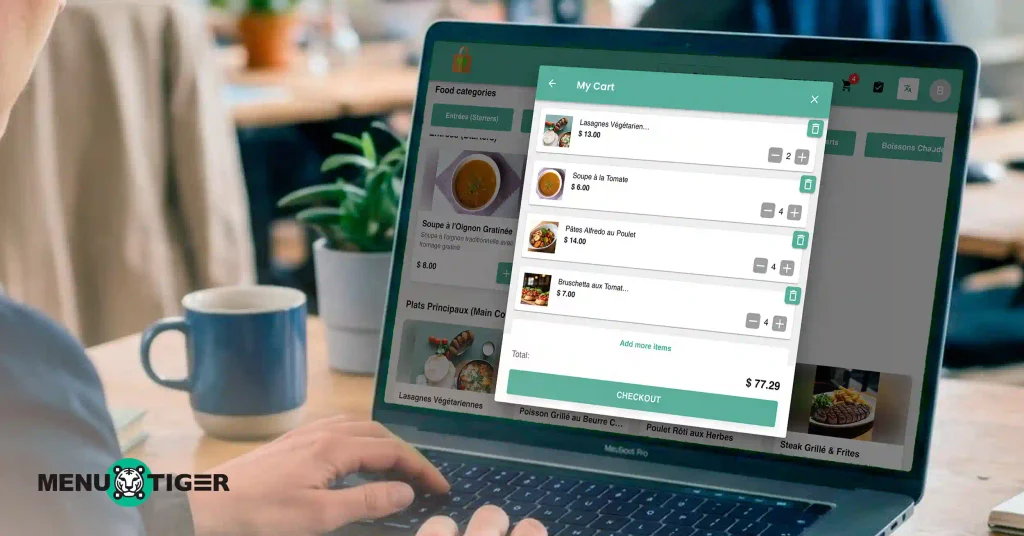
Put your set catering menus online so offices can order without planning a call. Save the calls for events that need a tailored menu or additional services.
A restaurant ordering system lets the organizer enter headcount, date, delivery address, and dietary notes, then pay in one place. Your team gets a complete order instead of piecing one together from emails.
Before investing in dedicated catering software for restaurants, see what your existing ordering system can already handle.
Let clients schedule catering orders in advance
Corporate meals work around a fixed schedule, so let buyers reserve a date and finalize the details later.
Set your booking cutoff according to order volume and preparation time, then set a separate deadline for final headcounts and meal substitutions.
Changes can be costly once ingredients are purchased or extra staff is scheduled. Clarify deadlines and cancellation terms before confirming the order.
How to prepare large orders without disrupting service
Match orders to kitchen capacity
Before accepting a catering booking, assess your kitchen’s remaining production capacity:
- Map out the production schedule. Fit catering preparations around dine-in, takeaway, and delivery orders.
- Assess labor and equipment. Review staff availability, cooking equipment, holding units, and packing space.
- Identify production bottlenecks. Your kitchen may cook 100 meals on schedule, only for packaging to delay delivery. Identify which stage limits your output.
If a request exceeds capacity, discuss a limited menu or fewer meals before accepting the booking.
Coordinate preparation across kitchen stations
Order changes or cancellations can be easy to miss when several stations handle the same catering order.
A kitchen display system (KDS) can help you route orders by station, track preparation progress, and relay updates to the team while work is underway.
Nail the final handoff
Catch missing items at the packing station rather than the office reception desk.
Before it leaves, check:
- Final quantities: Match meals, trays, and add-ons against the order.
- Packing and labeling: Keep hot and cold items separate. Mark dietary meals, individual names, or departments where needed.
- Delivery details: Confirm the address, reception point, contact person, and expected arrival time.
- Setup needs: Include serving utensils, napkins, and any other requested equipment.
Let the organizer hear about delays or missing items directly from your team. Share a revised delivery time or confirm when the replacement will arrive.
Turn corporate catering into repeat business
One-off orders make future catering revenue difficult to predict. After delivery, follow up within a day, ask about upcoming events, and propose a standing order, such as a weekly team lunch that fits the company’s budget and your kitchen’s capacity. Let returning clients reorder in a few clicks with your restaurant ordering system.
With consistent service, a first booking can grow into a long-term catering partnership.
Ready to take catering orders online? Set up your catering menu and online ordering with MENU TIGER.